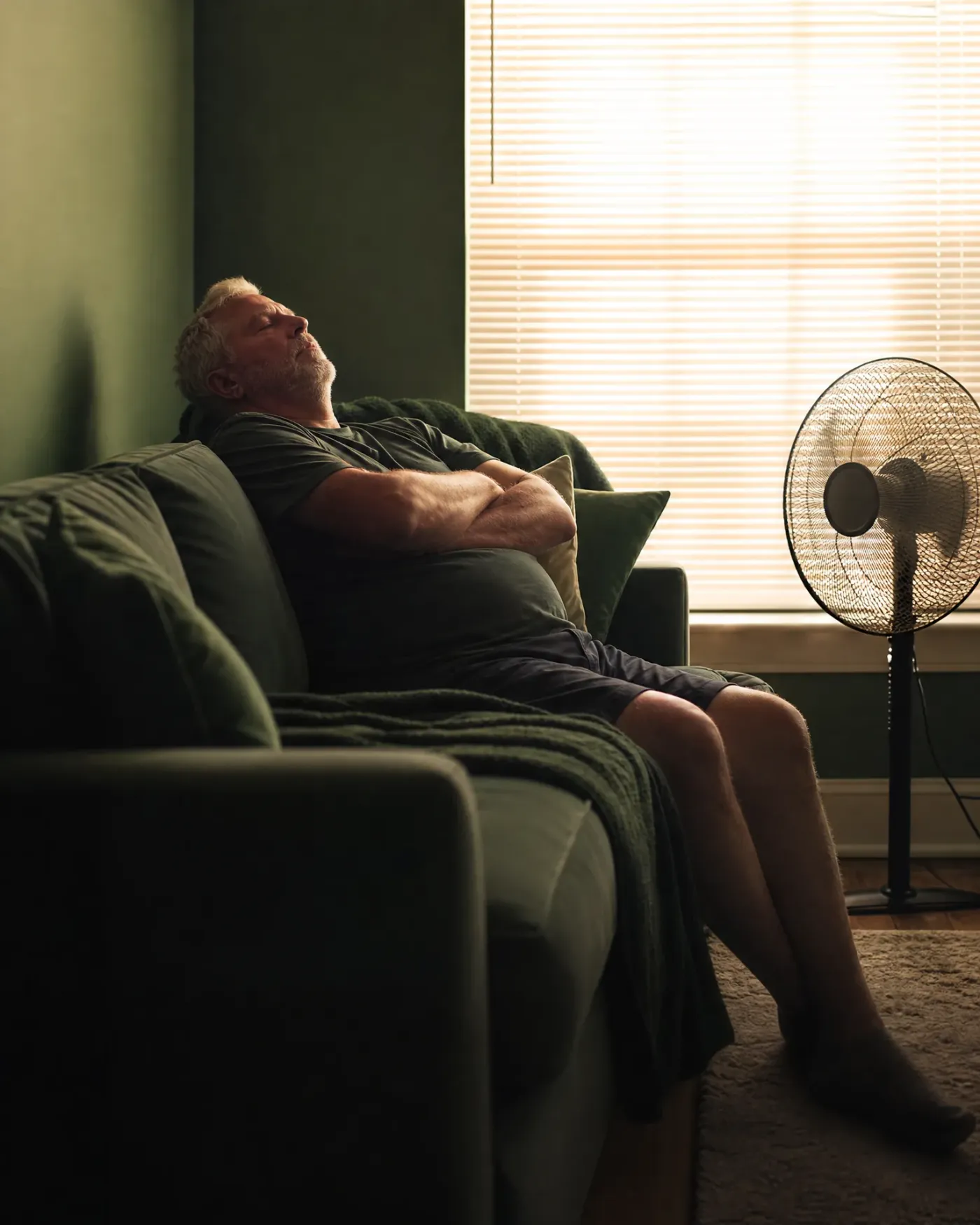
Why your heat pump runs on emergency heat in Texas

Step 1 of 3: Equipment

Why is my heat pump running on emergency heat?

Your thermostat shows "emergency heat" and the system switched over on its own, or you noticed the switch flipped and aren't sure why. In Texas, heat pumps handle most of the heating load, so when emergency heat kicks in it's worth knowing whether that's the system doing its job or a sign something's wrong outside.

It means the outdoor unit has stopped heating and the backup electric heat is covering for it

A heat pump moves heat from the outdoor air into your house, and that process needs the outdoor unit to run. Emergency heat shuts that unit off completely and relies only on the electric backup elements inside the air handler to warm the air. That backup is built for short gaps, not for running night after night. If it's staying on through a stretch of cold mornings, something outside has failed: a frozen coil that isn't defrosting, a dead compressor, a tripped breaker, or a problem with the reversing valve. Since most homes here heat with electricity already, running on backup heat alone usually means a higher bill for the same warmth, because the heat pump is no longer doing the efficient part of the job.

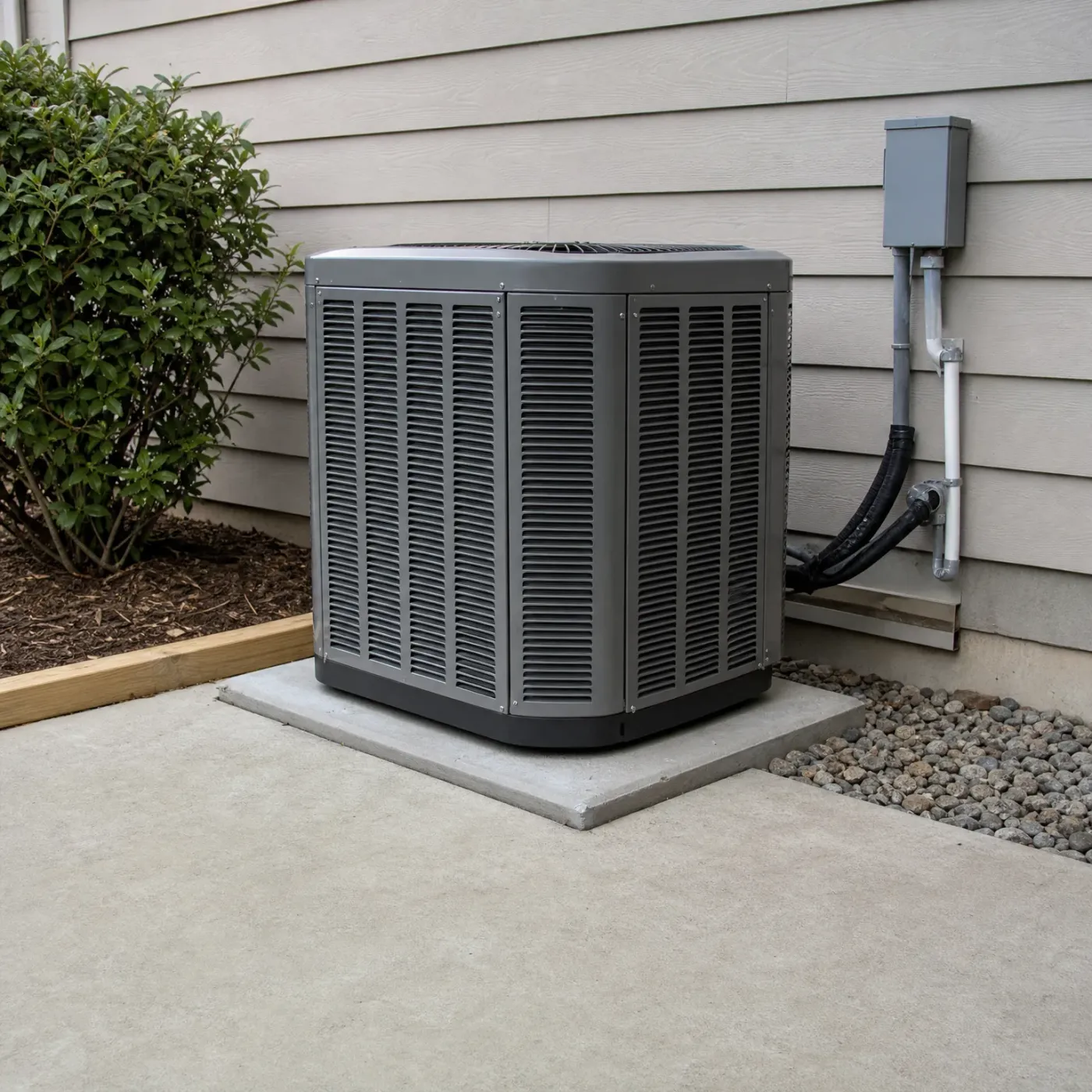
A gray outdoor condenser unit on a concrete pad beside a house with horizontal lap siding, with a wall-mounted disconnect box, conduit and insulated refrigerant lines, a shrub at left and gravel at right.

Heat pump running normally

The outdoor unit cycles on and off through the day, pulling heat from the outside air even when it's cold out. The thermostat reads the temperature you set, not "emergency heat," and the fan outside turns along with the compressor. This is the system paying for itself.
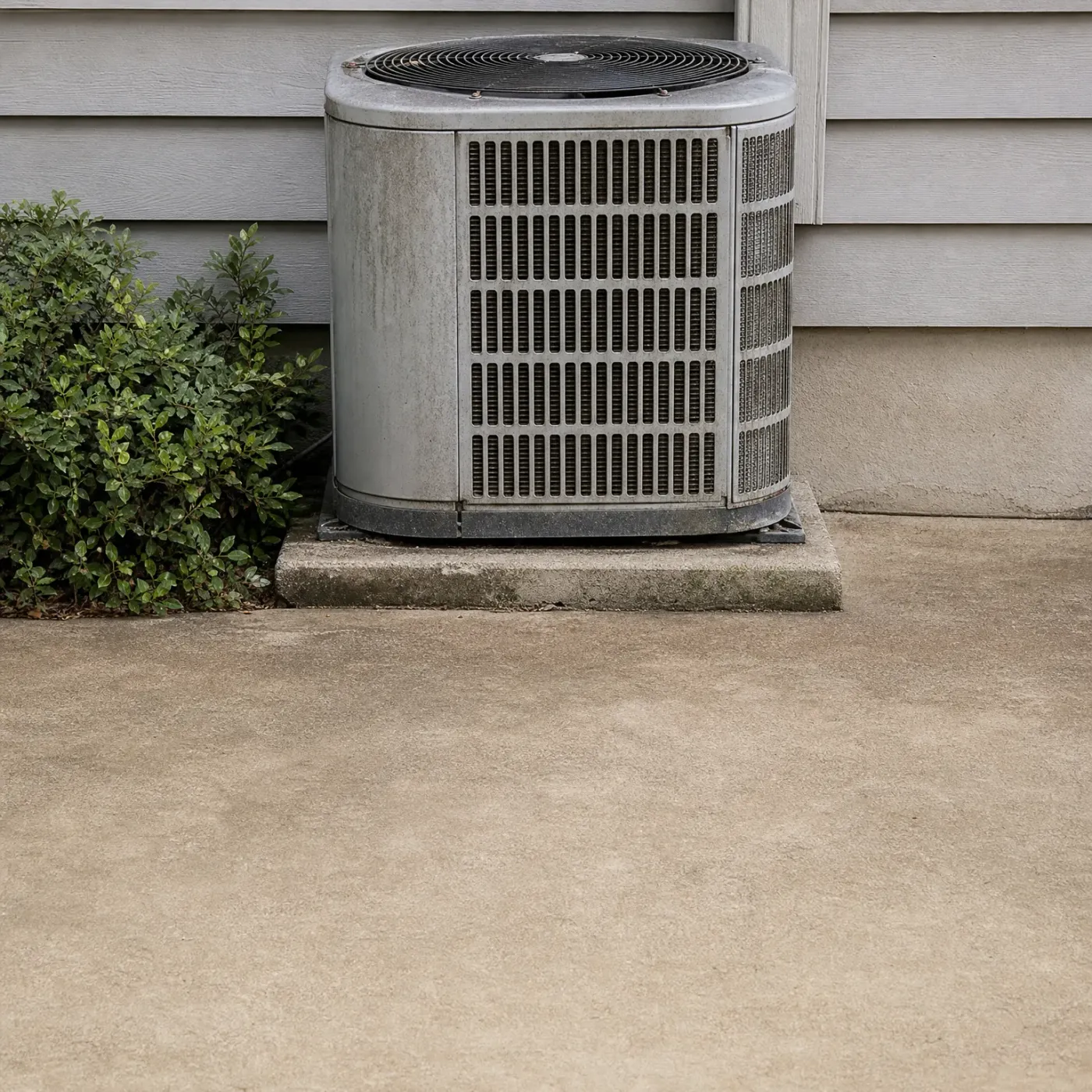
An outdoor air conditioning condenser unit on a concrete pad beside a house with horizontal lap siding, with a green shrub to the left and a wide concrete slab in the foreground.

Stuck on emergency heat

The outdoor unit sits idle no matter how cold it gets. Heat still comes through the vents, but it's coming from electric strip heat inside, not the compressor outside. Your thermostat display says so plainly, and your electric bill will too if it stays this way.

Why Did It Switch to Emergency Heat

Switched on its own

  • The outdoor unit isn't running, or isn't cycling on when the thermostat calls for heat, so the system falls back to the backup heat strip to keep the house warm.
  • This usually means something is wrong with the heat pump itself: a frozen outdoor coil, a failed compressor, low refrigerant, or a tripped breaker it can't recover from.
  • The house will still heat, because the backup strips work off straight electric resistance, but the outdoor unit is doing nothing to help.
  • A contractor needs to find why the heat pump stopped responding before switching the thermostat back to normal heat.
  • This can happen in the middle of the night or when nobody's watching the thermostat, which is why some homeowners don't notice the switch until the bill comes.

Switched on by you or the thermostat

  • Some thermostats default to emergency heat after a power outage or a reset, with nothing wrong with the heat pump at all.
  • If someone in the house pressed the emergency heat button or changed the mode by hand, the system runs on strip heat until it's switched back.
  • Outdoor temperatures well below freezing can also trigger emergency heat automatically on some systems as a safeguard, even when the heat pump is working fine.
  • Switching the thermostat back to normal heat and watching whether the outdoor unit starts up is the quickest way to tell if this is the case.
  • If the outdoor unit kicks on and runs normally after the switch, nothing needs repair.
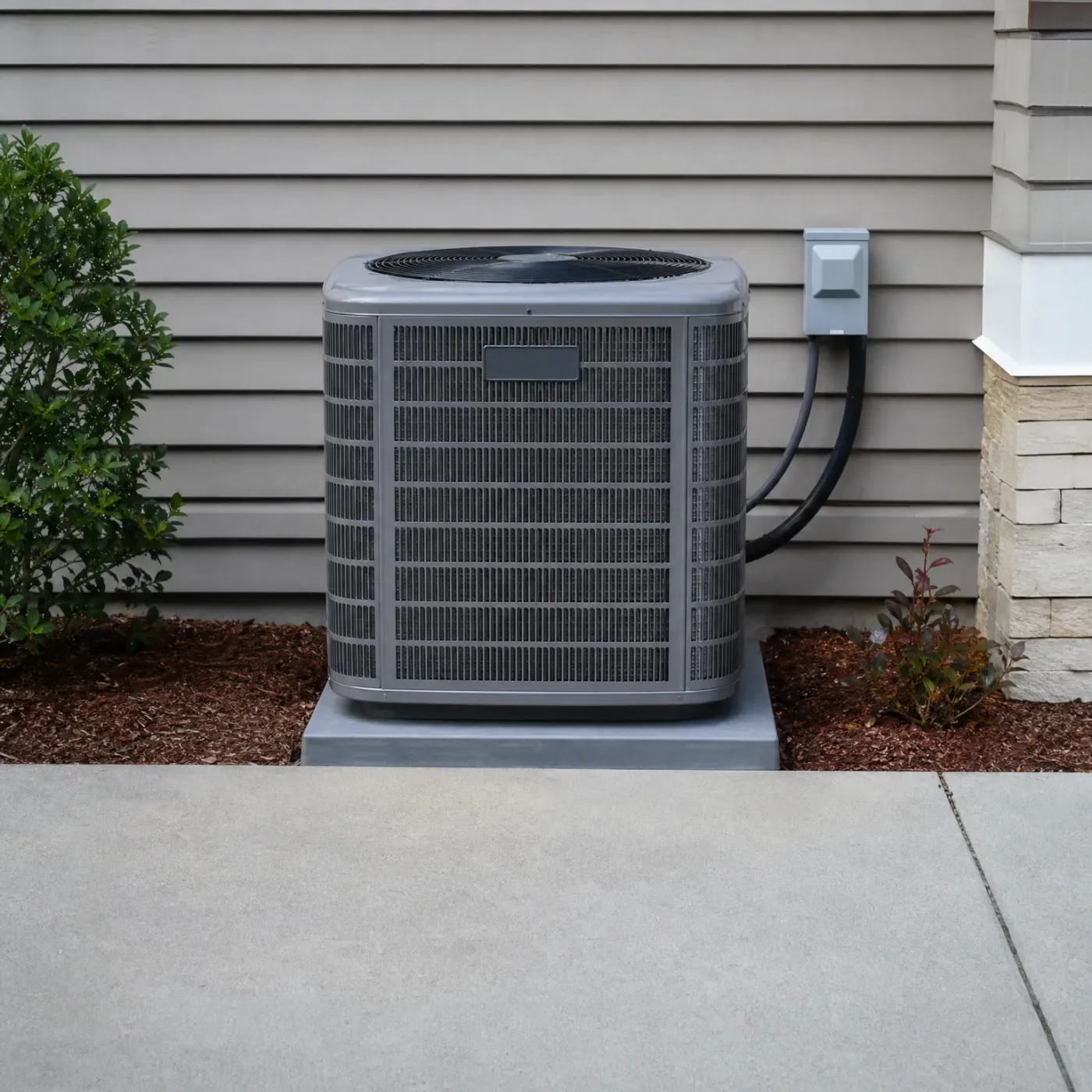
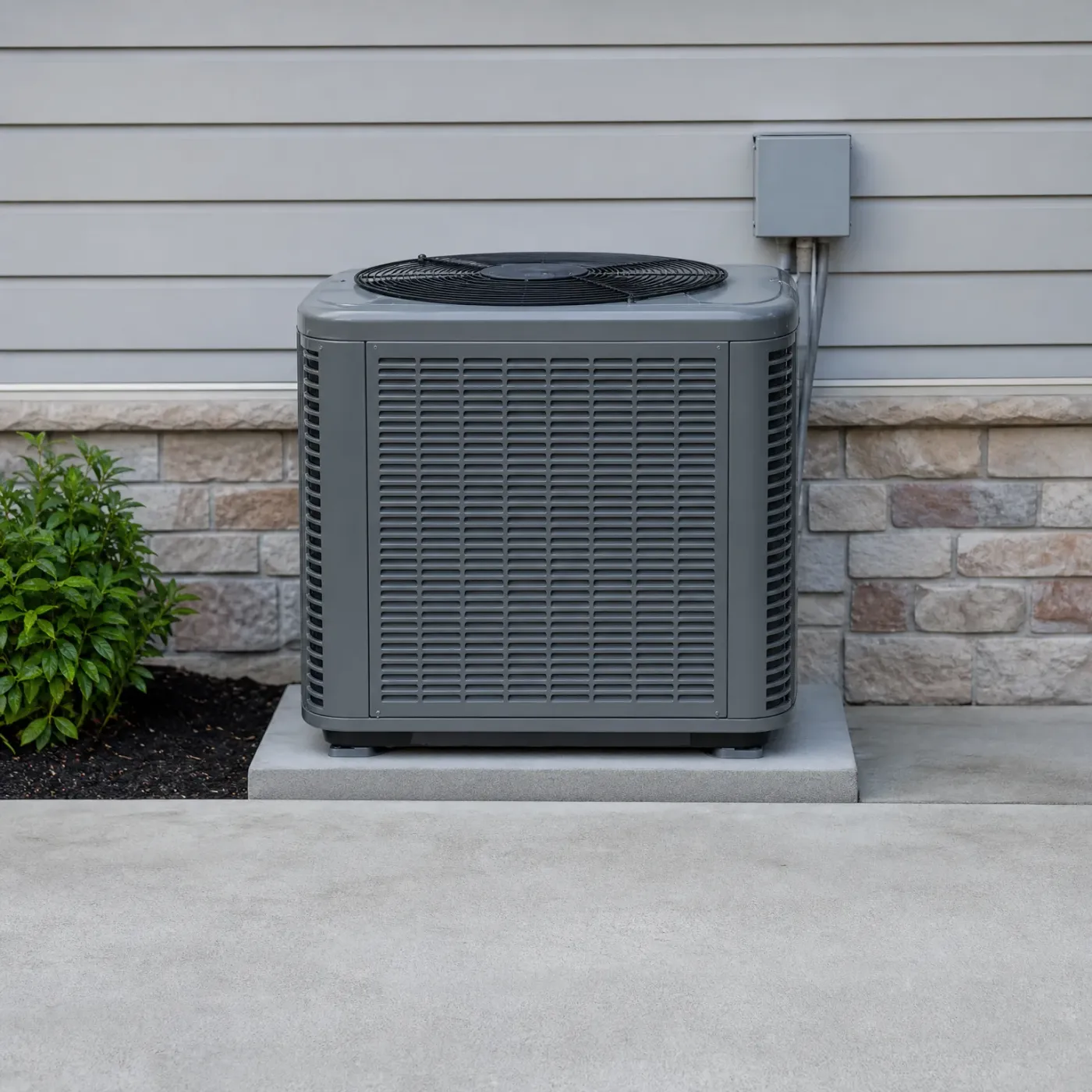
A gray outdoor condenser unit sits on a concrete pad against a house wall with horizontal siding above a stone veneer base, with an electrical disconnect box and conduit on the wall and a leafy shrub in mulch to the left.

Outdoor unit clean and clear

The coil fins are open and free of dirt, so air moves through the unit the way it should. Nothing is blocking the cabinet, and the disconnect box and conduit on the wall are just doing their job. A heat pump in this shape can pull heat from the outside air without a fight.

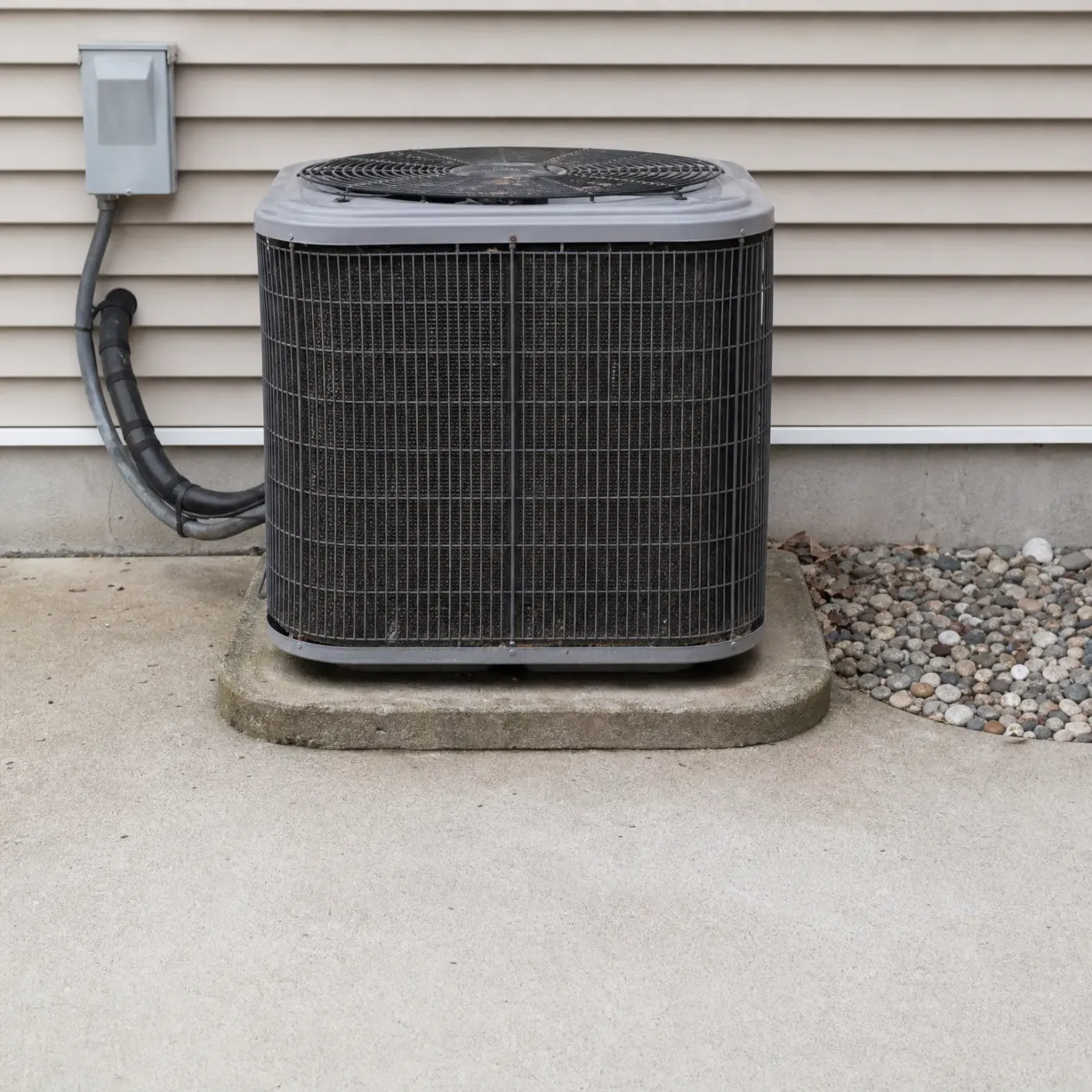
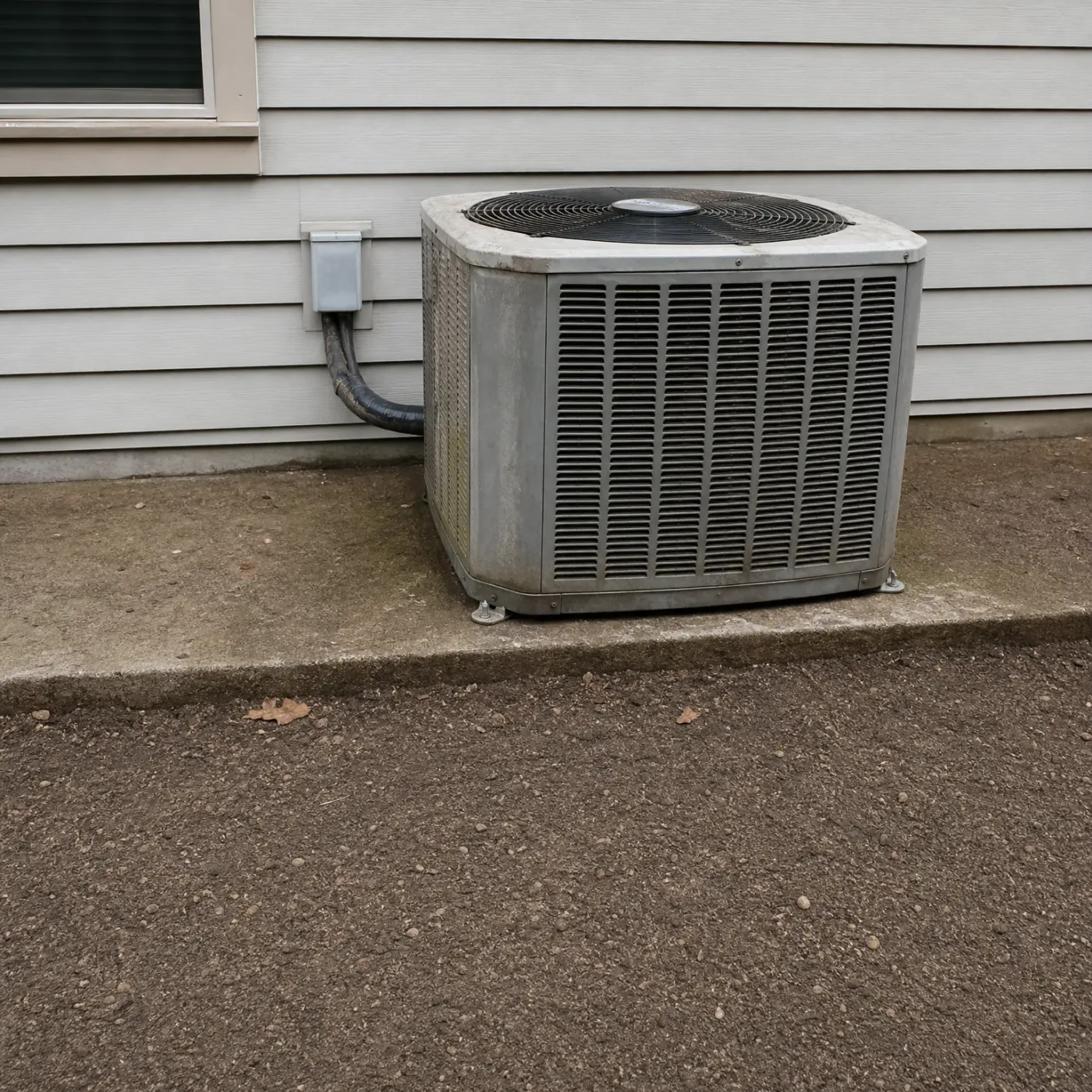
An outdoor air conditioner condenser unit on a concrete pad beside a house with beige vinyl siding, with a gray electrical disconnect box and insulated refrigerant lines on the wall and river rock to the right.

Coil fins clogged with debris

Dirt and debris have packed into the condenser coil fins, cutting off the airflow the unit needs to pull heat from the outside air. When the coil can't breathe, the heat pump struggles to keep up and the system falls back to emergency heat to cover the gap.

A smiling man with dark curly hair in a navy t-shirt sits on a gray couch indoors, with a large-leafed plant and a window in the background.
A bearded man in a plaid flannel shirt stands in a kitchen looking out a window toward snow-covered shrubs, with a steaming mug on the windowsill and potted plants on a shelf behind him.
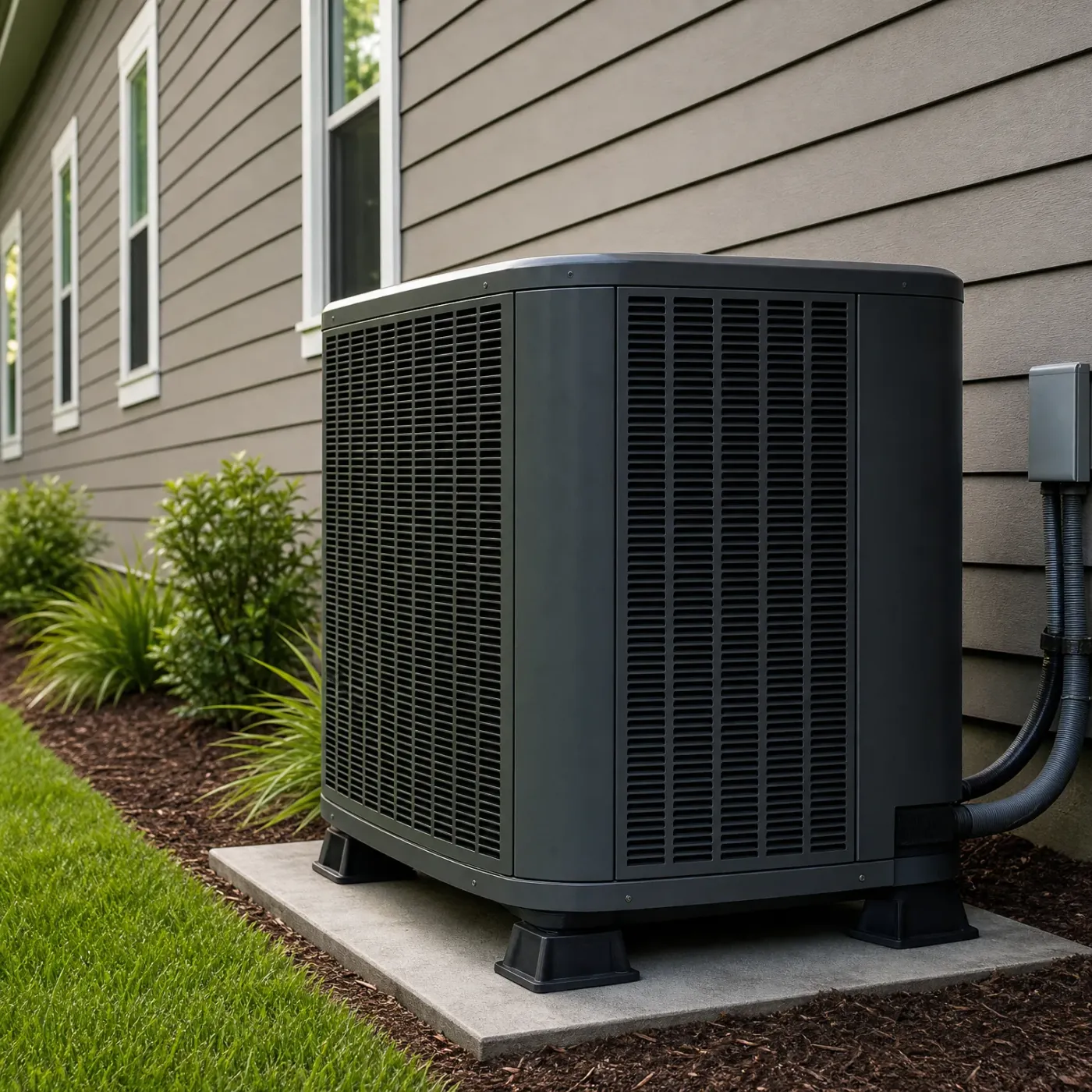
A dark gray outdoor condenser unit on a concrete pad beside a house with horizontal lap siding, with mulch beds, shrubs, and lawn nearby and conduit running to a wall-mounted box.

Finding a pro stops being your job

Describe what your heat pump is doing once, in one form.

Get the heat pump repair search off your mind today.

I'm done searching

No charge to send it. You decide if you hire them.

A closed silver laptop and a ceramic mug of dark coffee sit on a wooden table in front of two chair backs, with a kitchen counter, tiled backsplash, wooden cutting boards, a vase of greenery and a potted plant by a window behind.

What emergency heat does to your bill and your house

Emergency heat means the strips inside the air handler are doing the work the outdoor unit should be doing. Resistance heat like that pulls a lot more power than a heat pump moving warm air from outside, and most homes in Texas heat with electricity, so you'll see it on the bill before the system gets looked at. The house may still feel warm enough that nothing seems urgent. It isn't a reason to wait. A heat pump stuck in emergency heat has something wrong with it, whether that's ice built up on the outdoor coil, a failed defrost control, or a compressor that isn't starting, and none of those get better by running the strips instead.

You could spend an afternoon calling around, describing the thermostat and the switch to a few different companies, and waiting to hear back from each one before you know who can actually come out. Sending this instead gets you to a licensed contractor without doing any of that legwork yourself. You explain it once, to the person who's coming to look at the unit.

Interior corner of a room with a window and sheer curtain at left, a gray upholstered sofa with a cushion at right, and a round wooden table holding stacked books and a round vase with an olive branch.
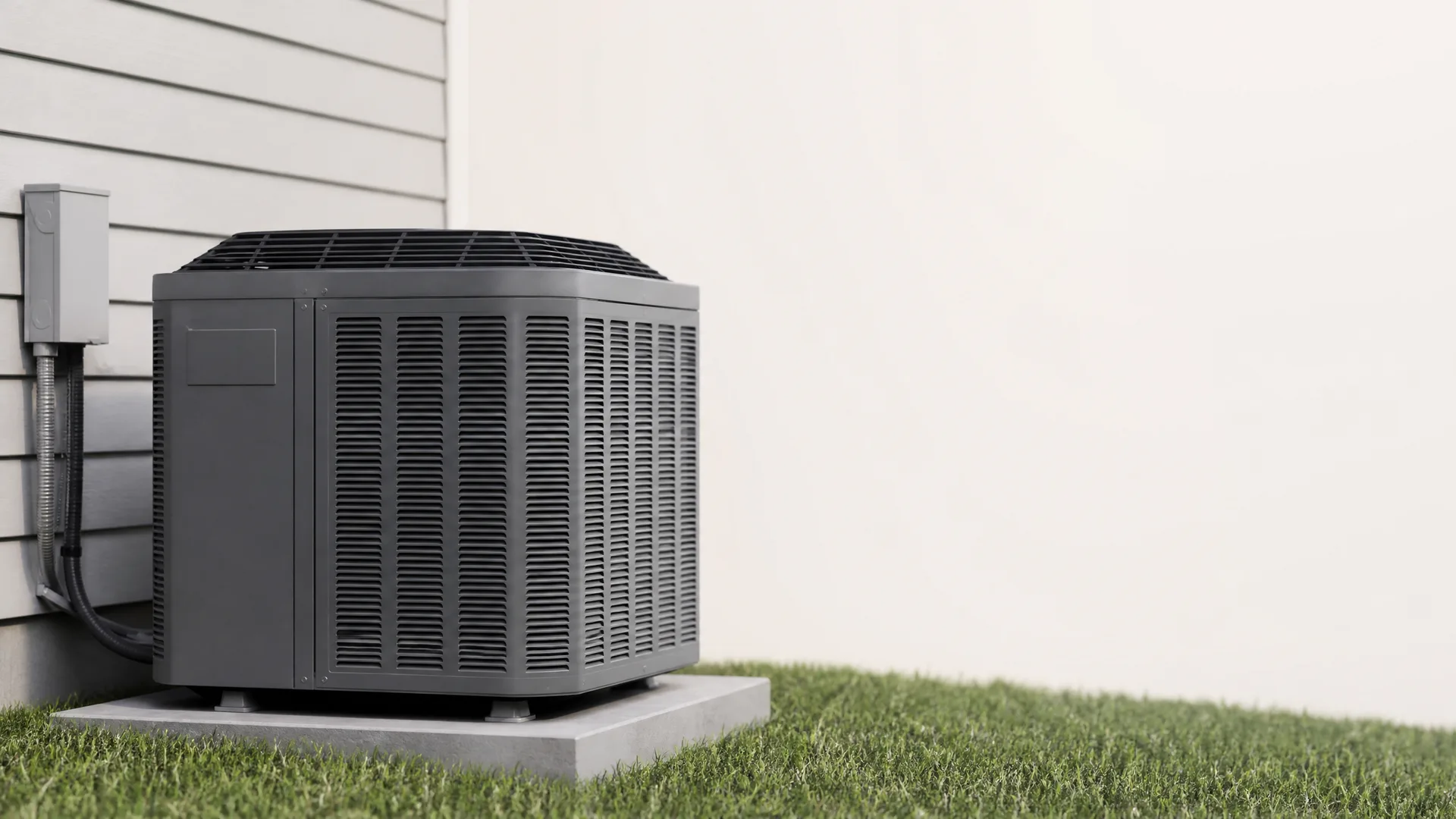
A gray outdoor air conditioner condenser unit on a concrete pad beside a house with horizontal siding and an electrical disconnect box, surrounded by grass.

How a heat pump makes heat

A heat pump doesn't burn anything to get warm. The outdoor unit pulls heat out of the air outside, even when it's cold, and the compressor moves it inside through the refrigerant line. That's why the outdoor fan runs and the coil can frost up in winter, then clear itself a few times a day. When that cycle works the way it should, the strips in the air handler stay off and the system runs on far less power than they do.

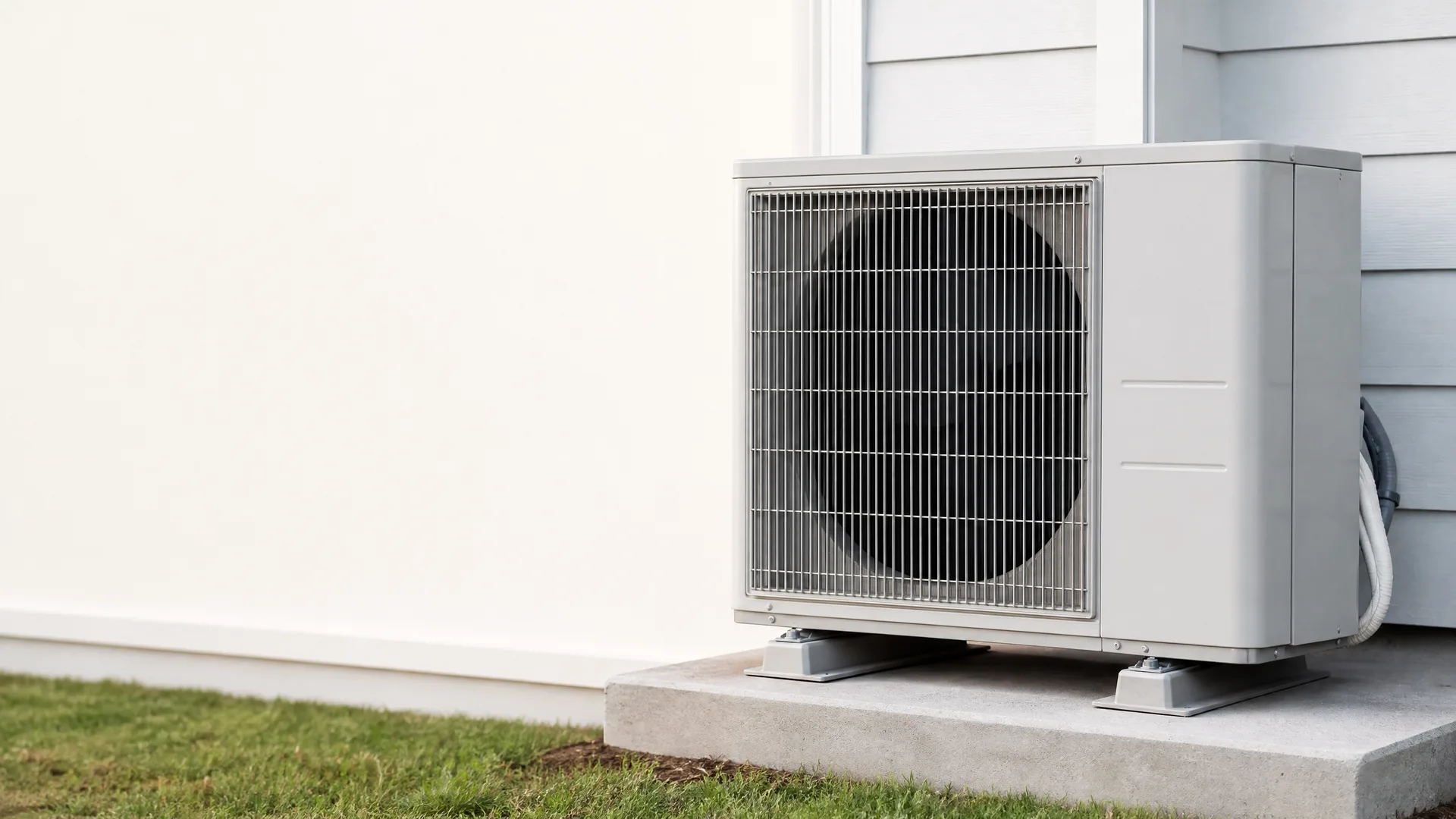
A white outdoor heat pump unit on a concrete pad beside a house with horizontal lap siding, with a plain light wall and grass lawn to the left.

Why the switch happens automatically

The thermostat or the outdoor control board watches for a heat pump that isn't keeping up or isn't running at all, and it switches to the strips without asking you. Some thermostats do this below a set outdoor temperature by design, which isn't a fault. Others switch because the outdoor unit stopped cycling or the defrost cycle won't end, and that's the kind of switch a repair can fix.

What are you noticing around the house right now

You turned up the thermostat and the air coming out feels hot, almost like a hair dryer, instead of the milder warmth a heat pump usually puts out. The outdoor unit is quiet, not running at all, while the system still keeps the house warm. Your electric bill this month is higher than last winter's, sometimes by a lot, because the heat strips pull far more power than the outdoor unit does. If the heat pump stays stuck on emergency heat for the rest of the season, you're paying that higher rate the whole time, and whatever stopped the outdoor unit from running is still there, unfixed.

A smiling man in a gray long-sleeved shirt stands in a kitchen looking to the side, with open shelves of dishes, a white mug on the counter, a potted plant, and a view through a doorway into a living room.
A smiling bearded man in a green sweater sits at a white marble kitchen island with a mug, potted plant and bowl of fruit, in a bright white interior with open shelving and an arched doorway.
A smiling man with dark curly hair and a beard, wearing a dark green knit sweater, stands at a white marble kitchen counter with a dark blue mug, with open shelving, pendant lights and a houseplant behind him.
A smiling man in a green ribbed sweater stands behind a wooden table holding a ceramic mug of coffee in a kitchen with white subway tile, shelves of potted plants, and a bowl of fruit.
A gray outdoor condenser unit sits on a concrete pad beside a house with horizontal lap siding, with a wall-mounted disconnect box and refrigerant lines, mulched beds and a shrub nearby, and a concrete walkway in the foreground.
The outdoor unit sits clean against the house, mulch beds neat, conduit running plain to the disconnect box. Nothing about it says it's working any harder than it should.
An outdoor air conditioner condenser unit on a concrete pad beside a light gray vinyl-sided house, with an electrical disconnect box and conduit on the wall and bare soil in the foreground.
Same kind of unit, same wall-mounted disconnect, but if yours looks like this and still won't run, the fix is likely inside it, not in front of it.

Power costs 15.40 cents per kilowatt-hour statewide

At 15.40 cents a kilowatt-hour, running the strip heat instead of the heat pump shows up fast on your bill, since resistance heat pulls so much more power to make the same warmth. The longer the outdoor unit sits idle, the more that difference costs you.

EIA-861 2025 statewide residential average

A heat pump that switches to emergency heat on its own is telling you the outdoor unit stopped doing its job, and something has to make up the difference. That something is the strip heat, and it will keep the house warm while it runs, but it isn't a fix. It's a stand-in. Left alone, you're paying for resistance heat every day the outdoor unit sits idle, and whatever stopped it, a frozen coil, a bad defrost board, a compressor that won't start, is still there. Instead of searching through contractors, calling a few, explaining the thermostat and the switch and the noise the unit isn't making, then doing it again for the next quote, you can send this once. From there, finding someone to look at the heat pump stops being something you have to carry. You already know what you're seeing and what it means. What's left is getting the outdoor unit back to doing the work it's supposed to do, so the strips go back to being backup instead of the whole system.

A dark wood cabinet with a paneled door and a ceramic pot of green foliage on top stands in a beige-walled room with white baseboard, a window at left, hardwood floor, and a patterned area rug.
A dark wood glass-front cabinet holding folded towels, woven baskets and a ceramic vase stands in a bathroom corner beside a window, with a potted fern and stacked towels on top and a freestanding tub partly visible at left.
A woven basket holding a green cushion and a cream fringed knit throw sits on a wood floor in a room corner beside a window and a dark wooden cabinet.
Corner of a room with a dark wood cabinet topped by a round vase, a linen curtain at a window, white baseboard, oak plank flooring with sunlight patches, and a woven jute rug in the foreground.
A dark wood sideboard against a pale wall holds a shallow stone bowl and a round ceramic vase with leafy branches, with sunlight from a curtained window falling across the wall, wood floor and woven rug.

Let someone else find the pro

Answer a few questions instead of calling shop after shop.

Hand it over

There's no charge for the request.