






Profile view of a bearded man wearing a black baseball cap and a dark gray T-shirt against a plain light background.

Why your heat pump fan won't spin in Texas

Step 1 of 3: Equipment

Why won't my heat pump's outdoor fan spin?

It is one more hot evening and the outdoor unit is humming but the fan on top sits still. In Texas that matters fast, since the system is likely carrying both your cooling and your heat, and a unit that can't move air outside stops working inside too. You want to know what's stopping that fan before the house starts catching up with the heat.

Usually a bad capacitor, a seized motor, or a tripped safety switch

Most of the time the fan motor itself is fine but it isn't getting the push it needs to start. The capacitor that kicks the motor into motion wears out after enough summers of heat, and once it goes the motor just sits there even though the unit is drawing power. Less often the motor bearings have seized, or a high pressure switch has shut the outdoor unit down because airflow is already blocked by something like matted leaves or grass clippings around the cabinet. Either way, the indoor side can't move heat anywhere once the outdoor fan stops, and in a Texas summer that shows up as a house that stops cooling within the hour.

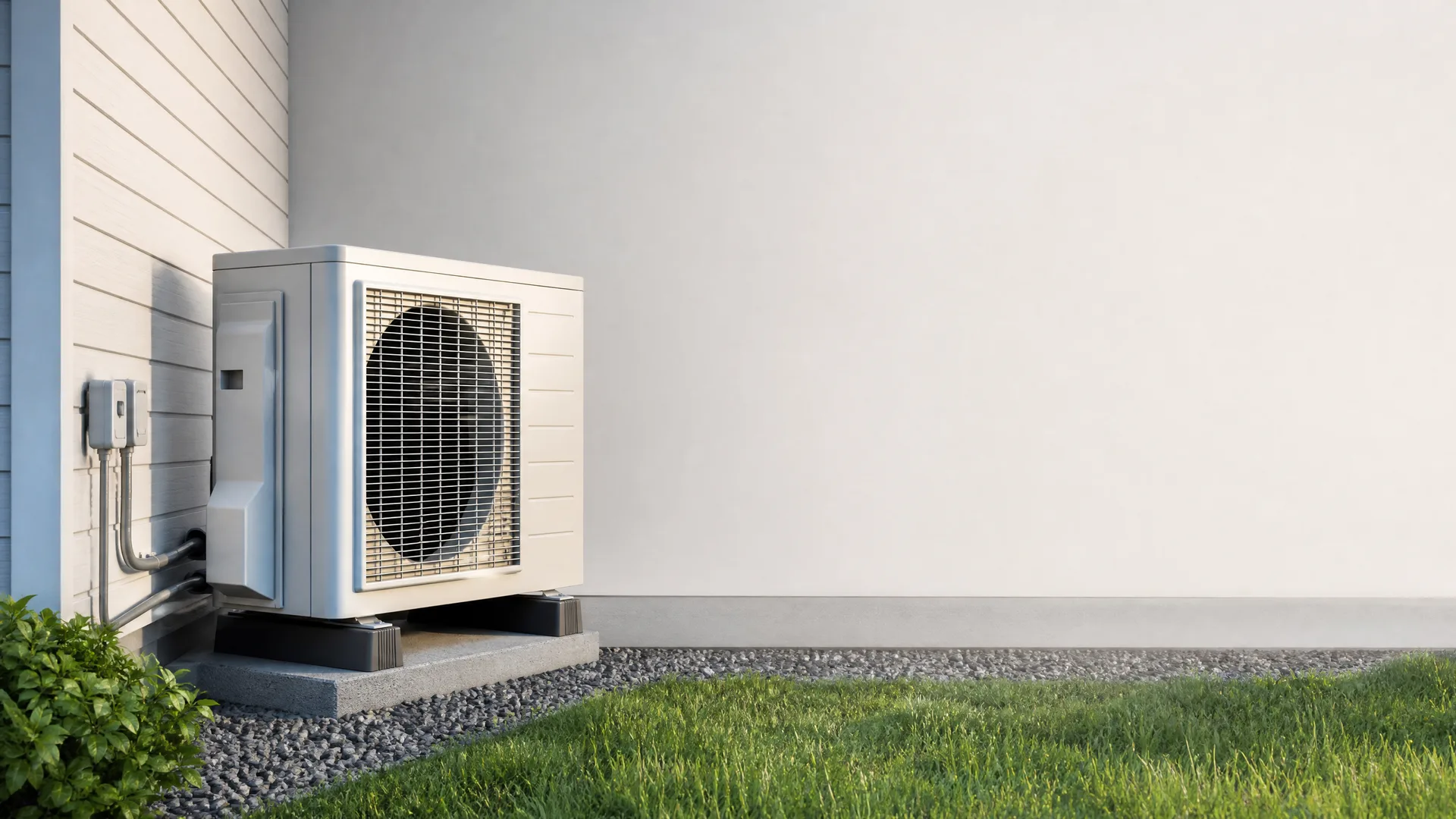
An outdoor heat pump unit on a concrete pad beside a house corner, with a small electrical box and conduit on the wall, gravel border, grass, and a plain light-colored wall filling the right side.

What a seized motor sounds like

If the fan doesn't spin but the unit hums, the motor is likely trying to turn and can't. That hum is the motor windings drawing power with nowhere for it to go. Left alone, that draw builds heat inside the motor, and a motor that overheats repeatedly will eventually fail for good. A contractor can check this with the power off, by hand, in a few minutes.

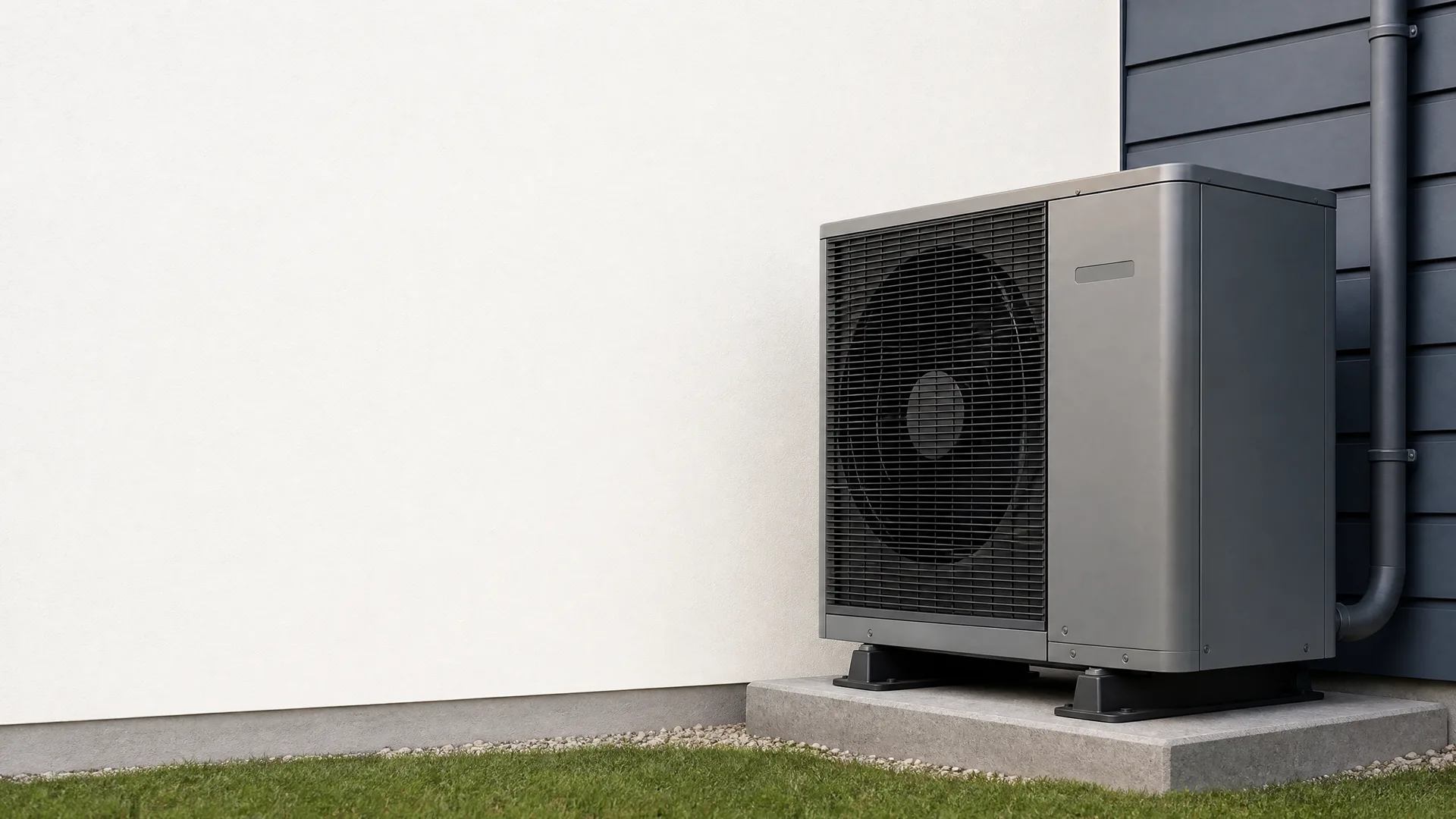
A grey outdoor heat pump unit on a concrete pad beside a white stucco wall and dark siding with a downpipe, with gravel and grass in the foreground.

The capacitor's one job

The fan motor needs a capacitor to give it the push to start turning. A capacitor that's gone weak might still run a fan that's already spinning, but it can't kick one off from a dead stop. That's why a unit can hum, draw power, and still sit still outside. A failed capacitor is a small, inexpensive part, but the motor behind it is not, which is why this one gets checked early.

Capacitor or Motor: What the Signs Say

Motor still runs

  • The fan blade spins freely by hand but the motor won't start it on its own, which points to a failing capacitor rather than a dead motor.
  • You hear the unit humming steady, not straining or grinding, and the hum doesn't stop or change pitch on its own.
  • The outdoor unit still trips on when you adjust the thermostat, it just can't get the fan moving once it does.
  • A contractor can test the capacitor in minutes with a meter, and swapping it is usually a short visit rather than a full teardown.
  • Nothing smells burnt from the unit, and the breaker hasn't tripped, both signs the motor windings haven't failed yet.

Motor has failed

  • The blade feels stiff or won't turn by hand at all, which means the bearings or windings inside the motor are gone.
  • The hum has a grinding or rattling edge to it, or it cycles on and off instead of holding steady.
  • You smell something faint and burnt near the outdoor unit, which is the motor windings overheating from trying to draw power with nowhere to send it.
  • The breaker has tripped once or more, which means the motor is pulling more current than the circuit can carry safely.
  • Replacing the motor means ordering the right part for your system, so a contractor local to Texas who works this equipment every summer is more likely to have it on hand.
  • Left running this way even a short while risks damage to the compressor too, since the system depends on that fan to move heat outside.
A smiling man in a dark navy sweater sits on a light sofa in a living room, with a glass bowl of popcorn on a wooden coffee table and bookshelves behind him.
A smiling man in a dark green sweater sits on a tan leather sofa in a dimly lit living room, with a bowl of popcorn in the foreground and a kitchen area blurred behind him.
A smiling middle-aged man in a dark shirt sits on a gray sofa in a living room, with a bowl of popcorn on a side table and shelves, a window and kitchen area behind him.
A smiling bearded man in a dark gray t-shirt sits on a gray couch in a living room, with a large glass bowl of popcorn on a wooden table in the foreground.

Hand off the heat pump problem

The pro who reaches out is licensed in Texas.

No fee to send it, and nothing to sign.

How the outdoor fan actually runs

  • The outdoor fan motor turns a shaft connected directly to the blade, with no belt between them.
  • A run capacitor stores the charge that kicks the motor into motion and keeps it spinning once it starts.
  • The contactor is a separate switch that sends power to the outdoor unit when your thermostat calls for heat or cooling.
  • Heat pumps reverse a valve to pull heat from the outside air, so the outdoor fan runs in winter too, not just summer.
  • A thermal overload switch inside the motor cuts power if it senses too much heat, which is why a motor can quit without blowing a fuse.
  • Dirt and grass clippings packed against the coil fins make the motor work harder to pull air through, which shortens its life.

The motor sits under the fan blade and drives it directly, shaft to blade, nothing in between to slip or wear thin. When your thermostat calls for cooling, or heat, the contactor closes and sends power out to the unit. That's a separate part from the motor itself, a switch, and it can fail while the motor is still fine. Getting the motor spinning takes a push. That push comes from the run capacitor, which stores a charge and releases it to start the motor turning, then keeps feeding it current so it doesn't stall once it's going. A heat pump runs this same fan in January as well as July, because the system reverses a valve to pull warmth from the outside air when it's heating your home, so a fan that won't spin in winter points to the same parts as one that won't spin in summer. Inside the motor housing is a thermal overload switch, a safety that shuts the motor down if it senses too much heat building up. That's why a motor can go quiet with no warning and no blown fuse. Nothing tripped. It just got too hot and protected itself. Grass clippings and dirt packed against the coil fins make the motor pull harder to move air through, and that extra strain is what drives the heat up in the first place.

A woman with dark hair in a bun reclines on a sofa with her eyes closed, wrapped in a cream fleece blanket, a closed blue hardcover book resting in front of her, with a lit lamp and a vase of dried flowers in the background.
A smiling bearded man in a navy sweater sits at a candlelit dinner table with a glass of red wine, a bowl of salad, and plates of food in the foreground.
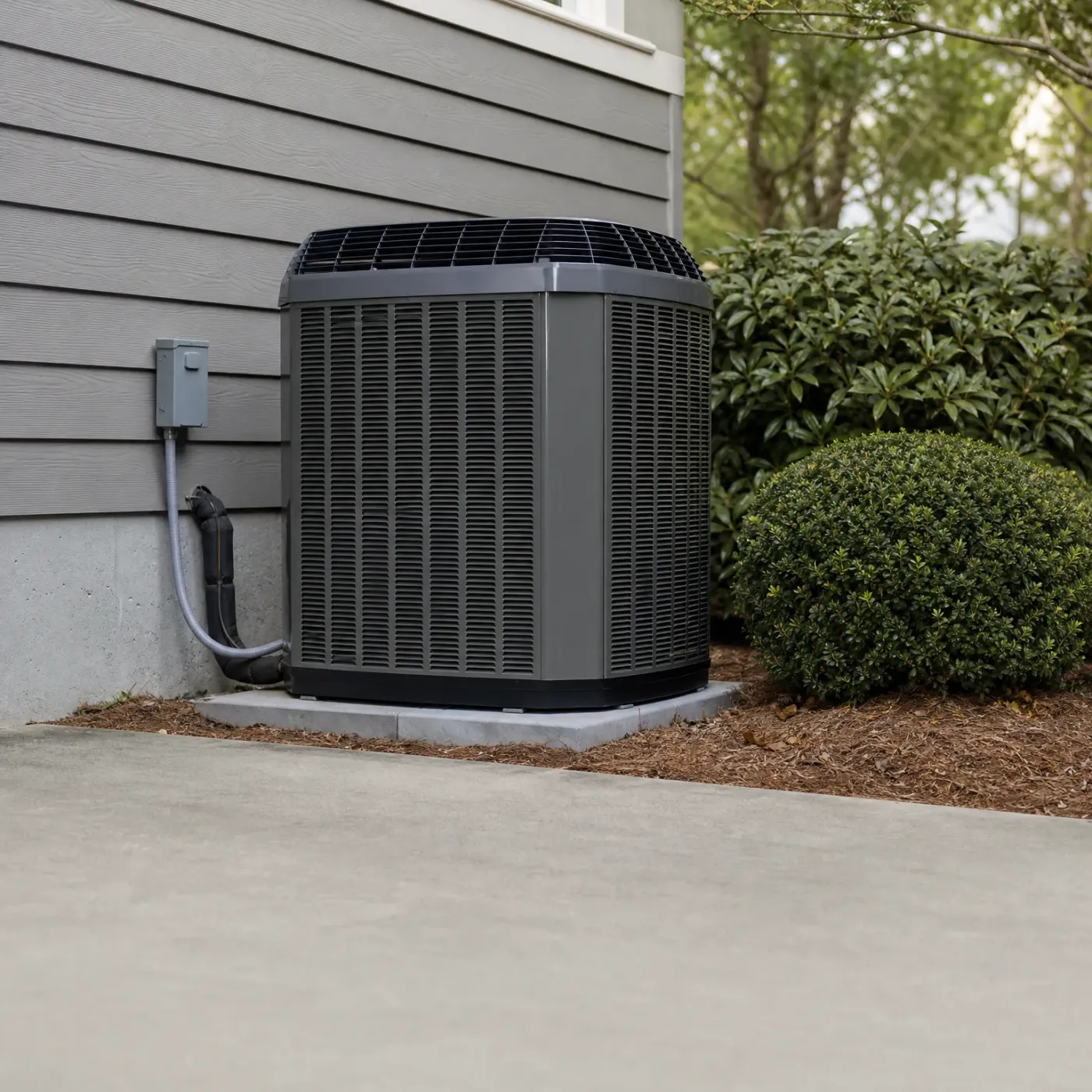
An outdoor condenser unit on a concrete pad beside a gray lap-sided house, with an electrical disconnect box and conduit on the wall and shrubs with mulch to the right.

Fan spinning freely

This is what your unit should look like: fan level, blades clean, nothing blocking airflow through the coil. Air moves through freely, the motor isn't straining against anything, and heat pulls off the coil the way it's supposed to. In July, that's the difference between a system keeping up and one that can't.
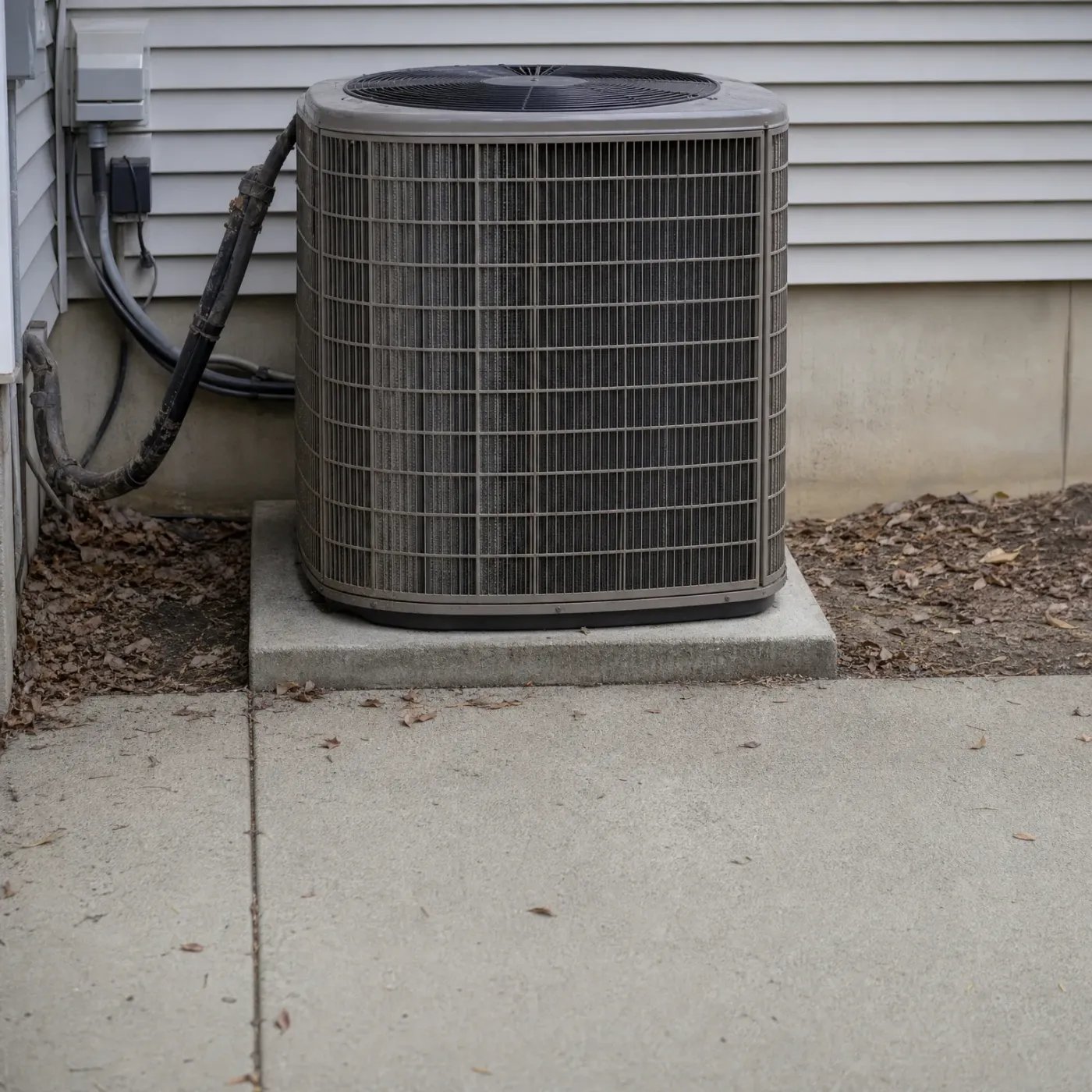
An outdoor air conditioner condenser unit on a concrete pad beside a house with horizontal vinyl siding, with refrigerant lines and an electrical disconnect box on the wall and dry leaves on the ground.

Fan stalled, coil fouled

Dirt caked on the fins and leaves piled against the base don't stop the fan directly, but they make the motor work harder to move air through a clogged coil. Over months that extra strain wears on the same motor and capacitor that a stuck fan points to. A dirty unit is worth ruling out before anything gets opened up.

What are you noticing at your own unit right now

Go stand by the outdoor unit. You'll likely hear the hum and feel it's warm to the touch, maybe hot near the top where the motor sits. The blades might have a film of dirt on them, or they might be clean and just not moving at all. Inside, the air coming out of your vents has probably gone from cool to barely moving air, or it's turned warm. If this keeps running as is, the compressor inside that same unit is working without the help it needs to shed heat, and compressors are the expensive part to replace. The longer the fan sits still, the more that risk grows.

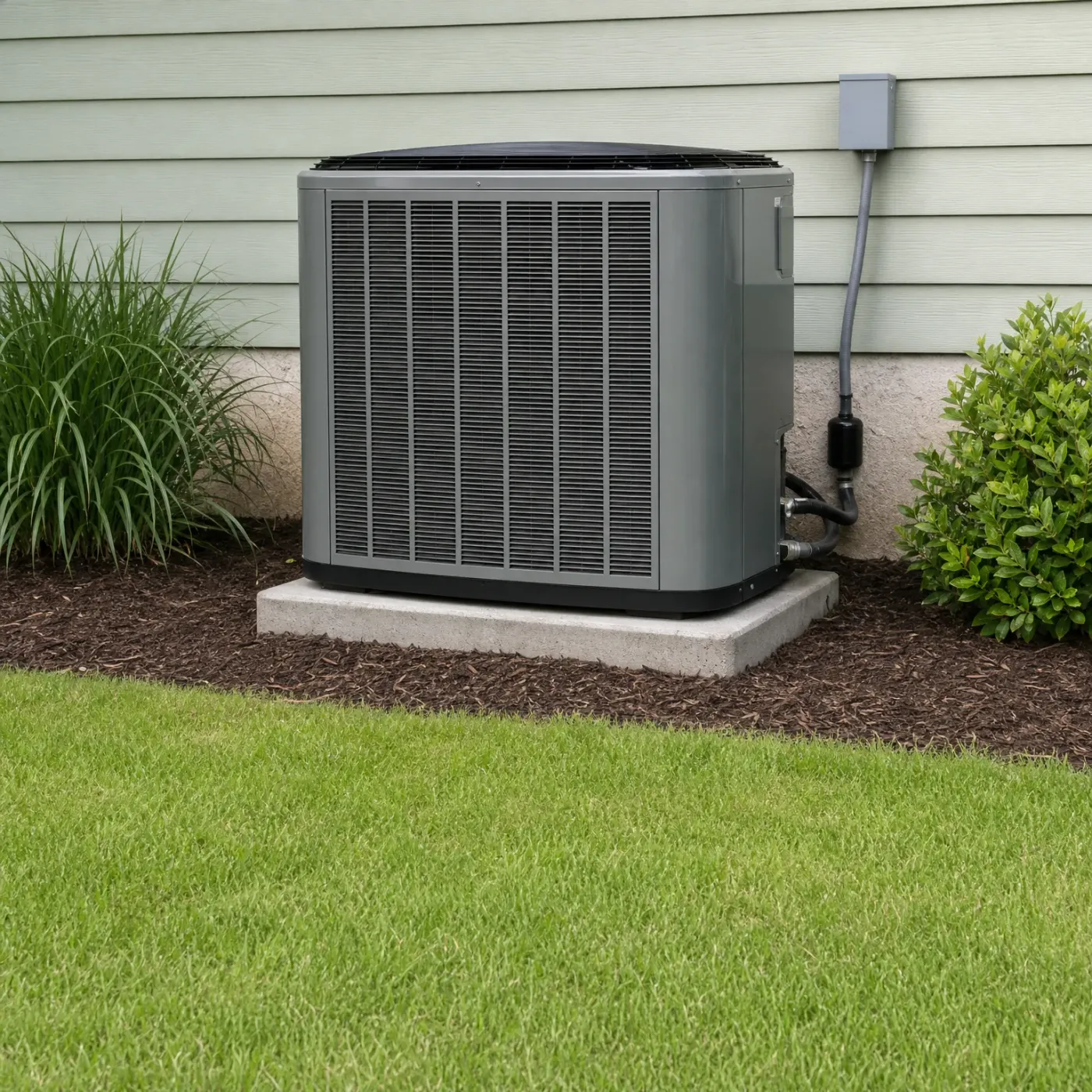
A gray outdoor condenser unit on a concrete pad beside a light-green sided house, surrounded by mulch, ornamental grasses and a shrub, with mowed lawn in the foreground.

A unit that's keeping up

The pad is clean, the mulch and grass trimmed back from the cabinet, and the disconnect box mounted clear on the siding. Air has room to pull through the coil. Nothing here is forcing the motor to work harder than it has to.

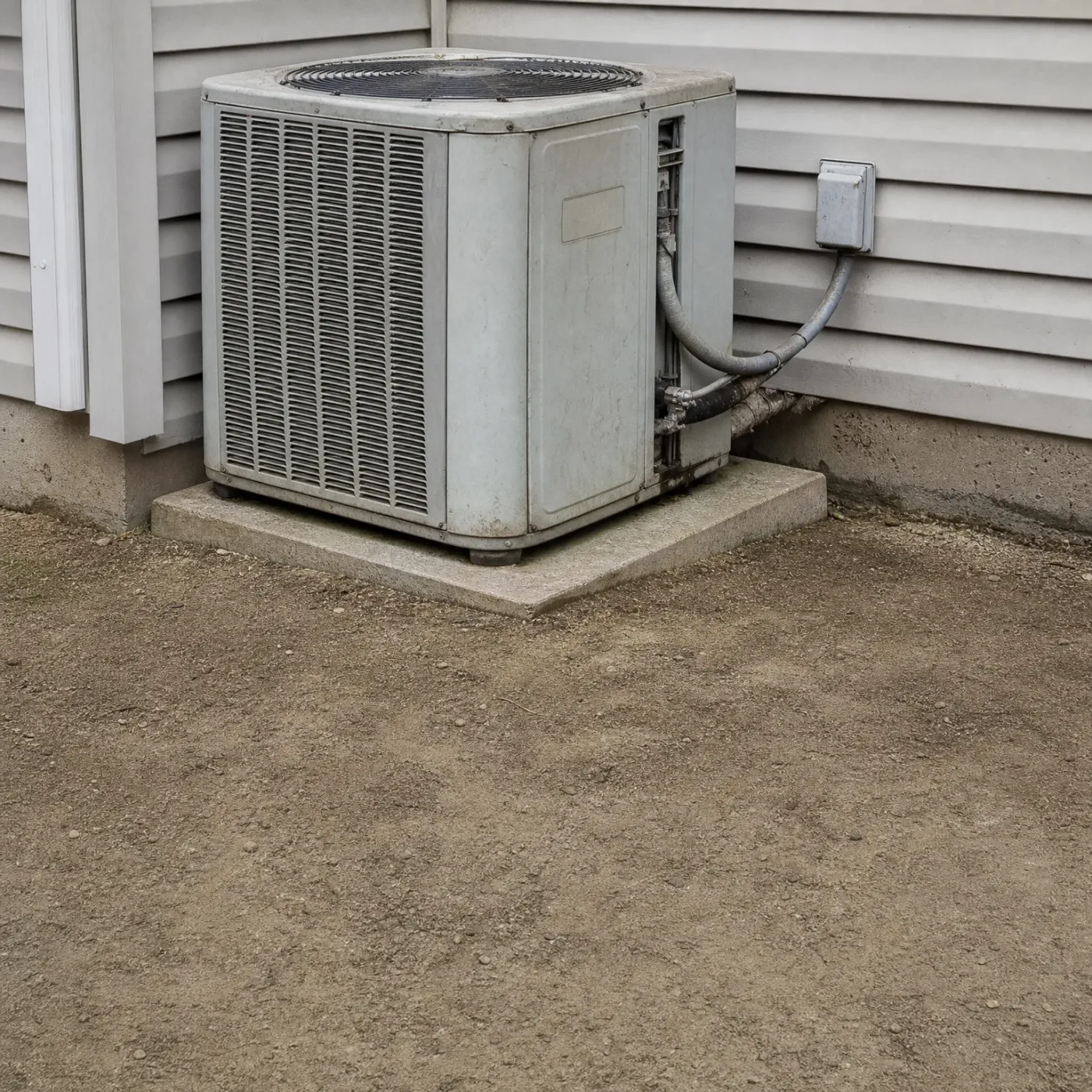
An outdoor condenser unit on a concrete pad beside a horizontal-sided house, with insulated refrigerant lines running to a wall-mounted box, surrounded by bare dirt.

A unit under strain

This one has sat through enough Texas summers to show it: weathered cabinet, the conduit running stiff into the disconnect box. Age alone doesn't stop a fan, but a motor that's been running hot for years is the one most likely to seize first.

Power costs 15.40 cents per kilowatt-hour statewide

A heat pump stuck trying to spin a seized fan draws power the whole time it can't move air, and in Texas that power runs 15.40 cents a kilowatt-hour. Your bill climbs for a unit doing no cooling at all. It's worth shutting off at the disconnect until someone looks at it.

EIA-861 2025 statewide residential average

A fan that won't turn is either a capacitor that's given out or a motor that's seized, and both stop your heat pump from doing its job in the middle of a Texas summer. You don't need to be the one who figures out which. What you need is someone who already knows, because he's been inside a dozen of these units this season alone and can tell from the hum, the smell, the way the blade moves by hand, which part failed. That's who gets the call, a licensed contractor working in your area, not a list of five companies racing to reach you first. One name, one visit, someone who sees this failure often enough to walk up to your unit already knowing what he's likely to find. The unit outside is done guessing for you. Send the request and the search is over.

A lit ceramic table lamp with a linen shade sits on a round wooden side table with a small vase of greenery and a dark shallow bowl, beside a beige upholstered sofa with a cushion and knit throw, below a framed artwork on a pale wall.
Corner of a beige linen sofa with a large woven cushion and a fringed knit throw, beside a potted leafy tree in a woven basket against a neutral wall.
Sunlit interior corner with a wood-framed armchair with beige cushions and a striped pillow, a leafy plant in a tall ceramic pot, a window with wood sill showing green foliage outside, and dark wood flooring.
A lit black path light beside a stone walkway leading to a dark front door of a white clapboard house, with shrubs and flowering plants in the bed at dusk.
A covered porch at dusk with a wooden front door, a lit lantern wall sconce on gray horizontal siding, a black rocking chair with a cream throw, a potted white flowering plant, a coir doormat, and a window showing a lit interior lamp.

Send one request and you're done looking

Only one pro gets your request, so you hear from one company.

Send my request

Sending the form costs nothing.